


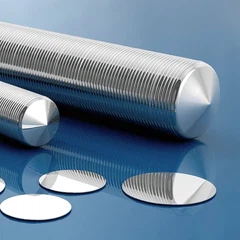




The semiconductor industry is intricately linked to the quality of silicon wafers, which serve as the foundational substrate for the creation of integrated circuits. Among the various substrate options, single-crystal silicon wafers stand out as the go-to choice, offering a suite of compelling benefits that set them apart from their polycrystalline and amorphous counterparts.
The allure of single-crystal silicon wafers lies in their remarkable uniformity across physical and electrical properties. This uniformity is a direct result of their meticulously organized crystal lattice, which features a uniform atomic arrangement. Such precision is not just a matter of quality; it's a necessity for the meticulous manufacturing processes that underpin the reliability and performance of integrated circuits.

Beyond uniformity, the purity of single-crystal silicon wafers is another standout feature. Cultivated from a single crystal seed in a meticulously controlled environment, these wafers boast minimal impurities. This purity is not just a matter of pride; it's a critical factor that can significantly influence the performance and dependability of the integrated circuits that are crafted upon them.
The capacity of single-crystal silicon wafers to withstand high temperatures is yet another advantage. Their robustness, with a melting point of 1414°C, allows them to endure the intense heat required for processing a range of semiconductor materials. This is not an insignificant detail; it's a critical attribute given that many materials used in the semiconductor industry, including dopants and photoresists, are subjected to high-temperature processes.
Furthermore, the production of single-crystal silicon wafers on a large scale is more manageable than one might expect. The process begins with a silicon seed crystal immersed in a molten silicon bath. As the seed crystal is gradually extracted, a single crystal emerges, a process that can be efficiently repeated to produce an abundance of wafers from the same initial melt.
The preference for single-crystal silicon wafers in the semiconductor industry is not a mere trend; it's a testament to their indispensable role in crafting high-quality integrated circuits. Their uniformity, purity, resilience to heat, and the scalability of their production are not just features; they are the cornerstones of their esteemed status in the realm of semiconductor manufacturing.


