





Glass Wafer
Ningbo Sibranch Microelectronics Technology Co.,Ltd.:Your Trustworthy Glass Wafer Manufacturer!
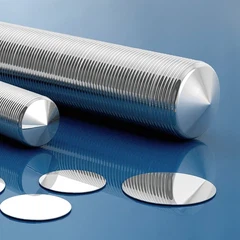
Founded in 2006 by material science and engineering scientist in Ningbo, China, Sibranch Microelectronics aims to provide semiconductor wafer and service all over the world. Our main products including standard silicon wafers SSP (single side polished), DSP (Double side polished), test silicon wafers and prime silicon wafers, SOI (Silicon on Insulator) wafer and coinroll wafers with diameter up to 12 inch, CZ/MCZ/FZ/NTD, almost any orientation, off cut, high and low resistivity, ultra flat, ultra thin, thick wafers etc.
Leading Service
We are committed to constantly innovating our products to provide foreign customers with a large number of high-quality products to exceed customer satisfaction. We can also provide customized services according to customers' requirements such as size,color,appearance,etc.We can provide the most favorable price and high-quality products.
Quality Guaranteed
We have been continuously researching and innovating to meet the needs of different customers. At the same time, we always adhere to strict quality control to ensure that the quality of every product meets international standards.
Wide Sales Countries
We focus on sales in overseas markets. Our products are exported to Europe, America,Southeast Asia,the Middle East and other regions, and are well received by customers around the world.
Various Types of Products
Our company offers customized silicon wafer processing services tailored to meet the specific needs of our clients. These include Si Wafer BackGrinding、Dicing,DownSizing、Edge Grinding, as well as MEMS among others. We strive to deliver bespoke solutions that exceed expectations and ensure customer satisfaction.


What is Glass Wafer
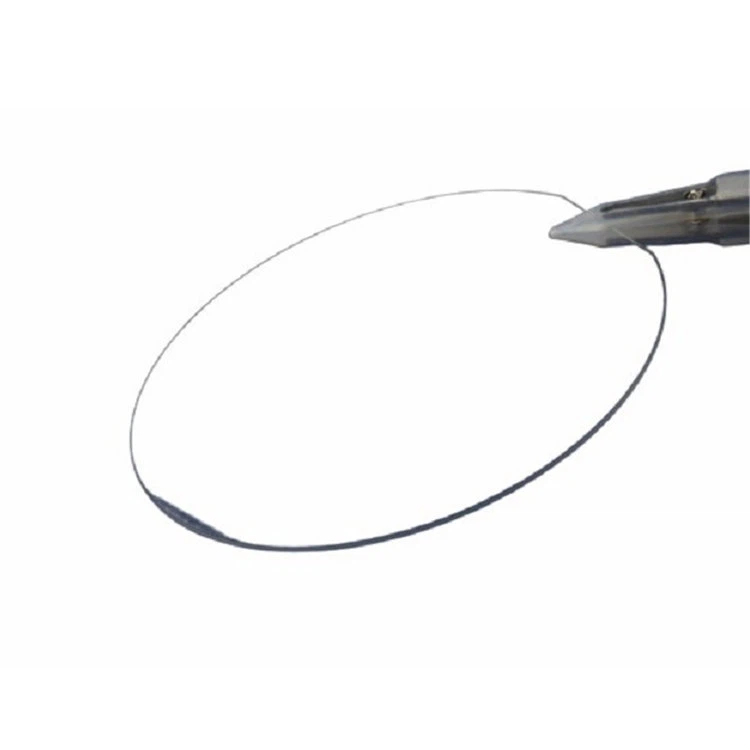
Glass wafers are thin discs of precision glass, usually made of borosilicate glass, quartz, or fused silica, and are used as a substrate carrier for bonding silicon and other substrates for MEMs (Micro Electro Mechanical Systems). Glass wafers are also used for engineering of displays and display glass inspection systems. The screens/displays you see in TVs, vehicles, phones and other smart devices consist of a “glass stack”—several layers of thin glass, each with a different function, including a protective layer, encapsulation glass, and a glass TFT (thin-film transistor) backplane. Functioning together, all these layers produce the images you see on the screen.
Transparency
Glass wafers’ transparency facilitates deboning and permits in-process examination. Additionally, it makes it simpler to spot any bonding problems.
Desirable properties
Due to its numerous advantageous qualities, including as resistance and mechanical strength, glass is a great material for carrier wafers. Glass has excellent thermal stability, which reduces the possibility of warping.
Sustainable and reasonably priced
Glass wafers may be cleaned and reused, saving money and helping the environment.
Durability
Glass wafers are extremely reliable and useful over the long term, even when subjected to hostile conditions.
Form and structure
Smoothness and flatness are two qualities that make glass a good choice to be used as a carrier substrate. In addition to sharing the same notch and edge bevel as silicon carrier wafers, glass wafers also benefit from the advantages of glass.
Manufacturing Process of Glass Wafer
Glass wafer is popular for its high strength and lightweight, which makes it a good material for construction projects. It can offer many benefits of using wafer glass in your construction project.
Using glass wafer requires precise tools to achieve the desired shape of your product before working with it any further. The terms used in shaping this material are "wafer" or "slab". A slab is preferred when you want a perfect edge free of bubbles and imperfections while the wafer edges are easier to make into more complex forms such as spheres or bowls by rolling them around an object over time
If you want to add a final finishing touch to your product, especially when using wafer glass as the material, you can use edge and edge detail tools in your project. These tools are essential to making sharp and precise edges on your project.
To make a flat or perfectly flat finish on the products made from wafer glass, you need to pay extra attention during grinding machines that process from intermediate products such as 10mm, 15 mm, or 20 mm thicknesses. Support rolls are added to the grinding machines to use during the grinding process. The support roll can be a flat face plate, a dome plate, or a cup wheel depending on your preferred finish.
To give your product a final touch and turn it into an elaborate piece, you should consider using polishing techniques such as wetsand or Cabot machines to give your product a glossier finish.Using wafer glass in construction products can be useful to many architects and designers because of its high strength and lightweight.
Applications of Glass Wafer


MEMs and Electronics
The microelectronic mechanical systems (MEMS) and electronics industries utilize glass wafer fabrication in wafer packaging and as substrate carriers. In MEMS and electronics applications, glass wafers are used in wafer packaging of sensitive components, due to their superior functionality and extreme reliability over time and in the face of harsh environments. As a carrier substrate, glass is chosen due to qualities such as thermal stability and chemical resistance. In the medical device industry, these wafers are used to facilitate gas-tight MEMS enclosures.
Biotechnology
Scientists and researchers increasingly use glass wafers to fabricate microfluidic chips. Borosilicate chips can be particularly useful for these applications because of their affordability and high chemical resistance.
Semiconductors
Glass wafers are used as a carrier substrate in the production of semiconductor wafers, which are fabricated from more delicate materials that can easily bend or tear. The glass substrate component allows the semiconductor wafer to be handled safely in spite of its delicate, thin qualities. Glass is chosen for its superior chemical and thermal stability, and the possibility of reuse can reduce cost and environmental impacts for some applications. As the Internet of Things (IoT) continues to expand rapidly, the glass wafer semiconductor market is expected to grow more than six percent between 2018 to 2022. There is significant crossover between semiconductors and other sectors. For example, semiconductors (and the wafers they contain) are used in a variety of MEMS and consumer electronics featuring IoT connectivity.
Integrated Circuit (IC) Packaging
Glass wafers are used in a variety of integrated circuit (IC) packaging applications, acting as a substrate to deliver better performance and cost effectiveness. Glass vias (TGV) and wafer level glass capping (WLC) are improved packaging solutions that offer enhanced technical performance, thanks to specific glass properties including stiffness and roughness under 0.5 nm rms. Glass protects the IC against impact and corrosion while holding the contract pins and leads that connect it to external circuits.
Glass Wafer Solar Cell Cover
When it comes to protecting your photovoltaic cells, the most common and cost-effective choice is a glass d263 glass for solar cell protectionwafer solar cell cover. This type of cover consists of two parts: a backsheet made of ultra-durable plastic, and a thin glass sheet that filters the sun's light into the solar cells. A glue called ethylene vinyl acetate holds the various parts together. The metal frame that encloses the solar cells latches onto the mounting clamps on your roof.
Glass cover for solar panelsIn order to create solar cells, a thin sheet of glass is pressed onto a metal frame. The metal frame protects the solar panel against inclement weather, and helps to align it at the desired angle. The glass sheet protects the solar cells by blocking out all sunlight except for the solar panel's surface. While the glass wafer is a great choice for protection, it's important to remember that it's a slew of other materials, including aluminum, that can cause arcing and reduce optical transmission.
When it comes to solar cells, glass wafer solar cell covers can help protect the solar cells from damage. They prevent sunlight from leaking into the cell. These covers are usually made from high-quality polymers. For instance, those made from D263 glass can last for many years. And while the glass may not look pretty, it's far more durable than its plastic counterpart. And the added protection of the glass wafer solar cell cover will protect your solar cells against the weather.
Soda Lime Glass Wafer Microslides
The chemical composition of Glass Wafer Microslides varies. The most common ones include 3-aminopropyltriethoxysilane, a compound with a NH2 group that attracts hematoxylin but does not adhere to it. Depending on the type of slide, a different percentage of silane will be used to coat it. This method is the best for creating uniform layers on the glass slides.
The manufacturing process for Glass Wafer Microslides starts with sand, limestone, soda, and chemicals. microslides made of soda lime glassThis material is heated to 1700 C or more than 3000 F, and then poured onto a thin layer of tin. This process has been used for centuries, and glass slides have been discovered when volcanoes erupted. It can last for years and is considered the best option for research in many fields.
Glass Wafer Microslides are manufactured using different materials. For example, borosilicate glass is one of the cheapest materials to use in glass fabrication. Soda lime glass, on the other hand, is commonly used for mirrors and microslides. Soda lime is a common type of glass for glass slides. It has a low density and high chemical resistance.
Glass Wafers for Liquid Crysal Displays
What kind of glass is used for touch panel controlsGlass Wafers for Liquid Craysal Displays are manufactured by coating silicon wafers with a polymer. This enables the liquid crystals to align with the glass's surface. The most common agents are polyvinyl alcohol, some silanes, and a mixture of these. A semi-dry process provides the best throughput, while a wet process provides a thin, uniform coating.
FAQ
We're professional glass wafer manufacturers and suppliers in China, specialized in providing high quality customized service. We warmly welcome you to wholesale glass wafer in stock here from our factory. Contact us for quotation.
Fused Silica Wafer