





Solar Cell
Ningbo Sibranch Microelectronics Technology Co.,Ltd.:Your Trustworthy Solar cell Manufacturer!
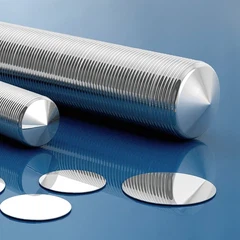
Founded in 2006 by material science and engineering scientist in Ningbo, China, Sibranch Microelectronics aims to provide semiconductor wafer and service all over the world. Our main products including standard silicon wafers SSP (single side polished), DSP (Double side polished), test silicon wafers and prime silicon wafers, SOI (Silicon on Insulator) wafer and coinroll wafers with diameter up to 12 inch, CZ/MCZ/FZ/NTD, almost any orientation, off cut, high and low resistivity, ultra flat, ultra thin, thick wafers etc.
Leading Service
We are committed to constantly innovating our products to provide foreign customers with a large number of high-quality products to exceed customer satisfaction. We can also provide customized services according to customers' requirements such as size,color,appearance,etc.We can provide the most favorable price and high-quality products.
Quality Guaranteed
We have been continuously researching and innovating to meet the needs of different customers. At the same time, we always adhere to strict quality control to ensure that the quality of every product meets international standards.
Wide Sales Countries
We focus on sales in overseas markets. Our products are exported to Europe, America,Southeast Asia,the Middle East and other regions, and are well received by customers around the world.
Various Types of Products
Our company offers customized silicon wafer processing services tailored to meet the specific needs of our clients. These include Si Wafer BackGrinding、Dicing,DownSizing、Edge Grinding, as well as MEMS among others. We strive to deliver bespoke solutions that exceed expectations and ensure customer satisfaction.


What is Solar cell
A solar cell or photovoltaic cell (PV cell) is an electronic device that converts the energy of light directly into electricity by means of the photovoltaic effect. It is a form of photoelectric cell, a device whose electrical characteristics (such as current, voltage, or resistance) vary when it is exposed to light. Individual solar cell devices are often the electrical building blocks of photovoltaic modules, known colloquially as "Solar cells". Almost all commercial PV cells consist of crystalline silicon, with a market share of 95%. Cadmium telluride thin-film solar cells account for the remainder. The common single-junction silicon solar cell can produce a maximum open-circuit voltage of approximately 0.5 to 0.6 volts.
1. Solar Is a Renewable Energy Source
As the name suggests, solar power is a resource that never runs out. Unlike fossil fuels, the production of which requires huge efforts, time, and expensive heavy machinery, renewables convert a natural resource – in the case of solar power, sunlight – directly into electricity. Another big factor that makes renewable energy much more attractive than coal, oil, and natural gas is the significant difference in emissions, namely fossi fuels being one of the world’s largest contributors to the generation of greenhouse gases. Renewable energy sources are not only cleaner but also cheaper and easier to produce than any fossil fuel.
2. Solar Energy is Immensely Abundant
In fact, solar is the most abundant energy source on the planet and throughout the years, we managed to develop innovative technologies that could allow us to depend entirely on solar for the rest of our existence. Another huge advantage is that just a tiny fraction of the sunlight we get every day can provide a huge amount of energy. Indeed, the US Department of Energy argues that an hour and a half of sunlight that reaches the planet’s surface generates enough power to meet all of humanity’s energy consumption for an entire year.
3. Solar Technologies Are Getting More Efficient
Over the years, scientists have made some important advances in the development of solar technologies, notably improving the efficiency of Solar cells and battery storage systems as well as their overall durability over time. Most panels today are between 15% and 20% efficient, meaning that they are able to convert 15% to 20% of the amount of sunlight they absorb into electricity. Panels’ efficiency has improved consistently over the past decade, a promising factor and one that contributes to continued cost reduction. Furthermore, their resistance to extreme weather has been drastically improved, bringing their average durability to about three decades with little to no loss in efficiency.
4. Solar cells Are Getting Cheaper
In the list of the advantages of solar energy, price is an important point. In its World Energy Outlook 2020 report, the International Energy Agency (IEA) confirmed that solar power schemes now offer the cheapest electricity in history. In its 2021 report, the Agency predicted that by 2050, renewable energy generation will keep growing, with solar power production skyrocketing and becoming the world’s primary source of electricity. Solar energy is indeed praised for the relatively marginal operation and maintenance costs of panels. While the cost of panels itself is the most critical part of the overall equation, solar is definitely a cheap source of power that can considerably lower the electricity bill in the long run.
How to Care for Solar cells
Tips for Maintenance of Solar cells
Keep Solar cells out of shade as energy production becomes inefficient when they are kept from absorbing any sunlight.
Keep an eye on the Solar cells and ensure the inverters are flashing green lights. If they are not flashing, you are losing money by no longer compensating for your electricity use.
Document the day-to-day performance to improve Solar cell maintenance. It is important to write down how much energy has been produced consistently daily and note dates when it is very cloudy.
Some of the results will be inconsistent. (Your manufacturer would be able to provide you with the best monitoring system for your Solar cells.)
Monitoring systems help you see how much you benefit the environment and how much CO2 you emit into the atmosphere. They can also help you know how much you could benefit from the feed-in tariff scheme.
You can also see information about your Solar cells servicing on a wall-mounted display at home.
If you have no time to clean Solar cells, you can install automated cleaners that work like sprinkler systems or even schedule appointments with Solar cell cleaning companies.
Luckily, solar power maintenance may not be needed because Solar cells have no moving parts that could be affected by rust or breakdown.
Cleaning Tips for Solar cell Cleaning
Solar cell cleaning kits come in very handy for cleaning Solar cells. Inside the kit is a biodegradable soap, a wiper, and a small brush or brush with a longer handle. Mix the soap in the bucket with water.
Instructions are provided on the bottle. Dip the brush in the bucket and begin gently wiping the Solar cells. You can use plain water or a soft brush to remove any grime or dirt that has built up on the panels.
How to clean Solar cells has never gotten easier! Clean Solar cells when moist or wet so any dirt or residue stuck on them can be wiped off easily.
Never use an abrasive sponge or soap to clean Solar cells, as you may scratch the glass. A soft rag or biodegradable soap is the best way to clean Solar cells.
It is important not to use harsh materials when cleaning Solar cells as they could cause damage, and Solar cells are costly to repair.
If you clean often, you might be able to just run a hose along the panels to remove any dirt. Fewer calls on Solar cell maintenance.
Use a long-handled wiper to clean the panels while standing on the ground for your safety and the safety of others around you.
Always watch out for dirt on the Solar cells to ensure they don’t build up since they can absorb sunlight better when they are free of dirt.
If you must get on the roof, take proper care, as once you begin cleaning, the roof becomes slippery, and you could slide off when you get down, so use safety ropes or a harness for support.
So, how often should you clean your Solar cells? That depends on the state of your Solar cells, which is affected by local weather conditions and other factors that can lead to debris accumulating on the surface of your Solar cells. Generally, Solar cells can be cleaned anywhere from once every 2 months to once a year.
Solar cell cleaning
Taking care of your Solar cells is crucial to ensure their longevity and efficiency, but sometimes cleaning and maintenance won't be enough to keep them running smoothly. If your Solar cells are old, damaged or simply not working as well as they used to, it may be time to consider replacing them with new ones.
What Is Solar cell Used For?
Solar Cell for Transportation
Solar energy is used in cars. This solar power is created by photovoltaic cells. This electricity is transferred to the storage battery or powers the motor.
Solar Cells in Calculators
Solar-powered calculators use photovoltaic cells. These calculators work with solar energy. The light from sun gives power for the operation of calculators. Solar calculators work very well in outdoor light.
Solar Cell Panels
On the rooftop, Solar cells are kept. It is used as a solar heater which heats the water. This water can be used for bathing. Also, another use it helps in generating power. People can store this energy in the backup battery and can use during power cut issues. Or people can store this energy and use it to generate electricity in their house and save money by reducing the electricity bill.

How to Choose Solar cells
Determine Your Energy Needs.
The first step in choosing the right Solar cells is to determine how much energy you need to generate. Consider your current electricity usage and how much you would like to offset with solar energy. This will help you decide how many Solar cells you need and what type of system is best for you.
Consider the Type of Solar cells.
When comes to the types of Solar cells, there are mainly three types available in the market: Polycrystalline, Mono PERC, and Half-Cut. Each type has its own advantages and disadvantages, making it important to choose the right type according to your budget, energy needs, and the amount of sunlight you expect to get.
Polycrystalline Solar cells
Polycrystalline solar PV Modules are the most affordable option and are suitable for areas with high temperatures. However, their efficiency is lower compared to other panel types, which may make them less suitable for limited roof space.
Mono PERC Solar cells
Mono PERC Solar PV Modules are more efficient than Polycrystalline Solar PV Modules and take up less space, making them ideal for smaller roofs. They perform better in low light conditions, making them suitable for areas with less sun exposure. However, they are more expensive than Poly Solar PV Modules.
Half-Cut Solar cells
Half-Cut Solar PV Modules are a relatively new technology, offering higher efficiency and better performance in high temperatures. They are more expensive than Poly Solar cells but can result in significant cost savings in the long run due to their increased efficiency.
Look for Quality Solar cells
The quality of Solar PV Modules can vary depending on the manufacturer. Look for Solar cells that have a good warranty period, typically 25 years. The warranty should cover defects and performance issues. You can also check the reviews and ratings of the Solar cell Manufacturer online to ensure that they are reputable.
Check the Solar cell Efficiency
When choosing Solar cells, look for ones that are high-efficiency. This means they can convert more of the sun’s energy into usable electricity. High-efficiency panels will generate more electricity with fewer panels, so they are a great option if you have limited space.
Consider the Location
The location where you live will have an impact on the type of Solar cells you should choose. If you live in a hot and sunny area, you’ll want to look for panels with a higher temperature rating. If you live in a cooler climate, you may want to look for panels with a lower temperature rating.
Think about the Cost
Solar cells can be expensive, so it’s important to consider the cost before making a purchase. Look for Solar cells that offer the best value for your money. Compare the cost of the panels with the amount of electricity they will generate to make sure you’re getting a good deal.
FAQ
We're professional solar cell manufacturers and suppliers in China, specialized in providing high quality customized service. We warmly welcome you to wholesale solar cell in stock here from our factory. Contact us for quotation.
Silicon Photovoltaic Cell