





Silicon Wafer
SiBranch Microelectronics Technology
Trusted partners in high-tech fields such as semiconductors, electronics and information technology. Founded in 2006 by materials science experts in Ningbo, China, Sibranch Microelectronics aims to provide semiconductor wafers and services to customers worldwide.
High quality semiconductor materials
Our company specializes in semiconductor silicon wafers from reputable sources. Our products are renowned for their quality and reliability, backed by strict quality control standards. All our wafers meet international industry specifications, ensuring stable performance and long-term durability. Trust us for your semiconductor needs — we deliver excellence.
Professional Team
Since 2006, our company has been dedicated to providing comprehensive silicon wafer solutions, accumulating nearly 18 years of industry experience. Our founding team consists of professionals with advanced degrees in materials science and semiconductor fields, ensuring the highest level of expertise and commitment to excellence.
Custom Service
We offer customized silicon wafer processing services tailored to meet the specific requirements of our clients. These include backgrinding, dicing, downsizing, and edge grinding, as well as MEMS processing and more. We strive to deliver bespoke solutions that exceed expectations and ensure complete customer satisfaction.
Competitive Price
With extensive inventory and long-term partnerships with reliable suppliers, we are able to offer highly competitive prices. Customers can choose from a wide range of silicon wafers, ensuring cost-effective solutions without compromising on quality.
Related Products


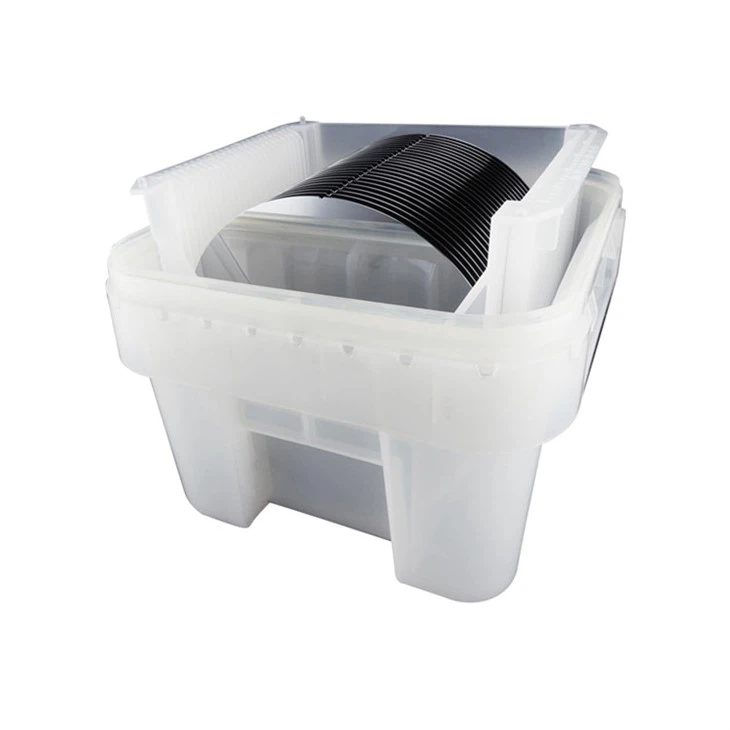
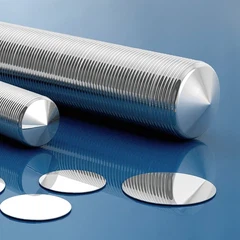
Silicon wafers are thin slices of crystalline silicon, a semiconductor material, used extensively in the production of electronic components such as transistors and integrated circuits. They serve as the foundation for most semiconductor devices, providing a stable platform for the deposition of various materials and the formation of intricate circuits.
Manufacturing silicon wafers involves meticulous processes including crystal growth, slicing, and polishing. The resulting wafers are highly pure with precise dimensions, which is crucial for ensuring the performance and reliability of the final electronic products.
With the rapid advancement of technology, demand for silicon wafers has skyrocketed. From computers and smartphones to renewable energy systems, these wafers are the fundamental building blocks of our modern electronic world.
As a Leading Silicon Wafer Supplier
Our company maintains a diverse inventory of high-quality semiconductor wafers, backed by a stable supply chain. We pride ourselves on delivering personalized solutions through expert technical support, meeting every unique requirement. Furthermore, we cater to research institutions by accepting small-quantity orders and providing customized services.
Our comprehensive range of services includes laser cutting, edge grinding, laser marking, thermal oxidation, MEMS processing, annealing, and other specialized services for both standard silicon wafers and silicon-on-insulator (SOI) wafers. Trust us for seamless, comprehensive solutions tailored to your specific needs.
Key Advantages of Silicon Wafers
Silicon wafers are essential components that enable modern technology to be both effective and portable. They are used across many industries and scientific fields, including research and production laboratories.
- Reliability: They can withstand high temperatures without compromising power quality or signal integrity
- Superior Thermal Conductivity: Thin silicon wafers offer enhanced thermal dissipation
- Enables Miniaturization: Thin silicon wafers support continued miniaturization of electronic devices
- Extreme Flatness: Silicon wafers are produced with extremely subtle surface irregularities, making them among the flattest man-made objects in the world


Why Silicon Wafers Are Important to Industry
If you work in information technology or scientific research, you are certainly familiar with silicon wafers. These devices are essentially thin, circular discs used in the manufacturing of semiconductors and integrated circuits. Specialized types such as silicon-on-insulator (SOI) and gallium arsenide wafers require extremely careful manufacturing processes to guarantee high efficiency. Even experienced technicians handle silicon crystal growth with extreme care, as the entire process must be completed in a tightly controlled environment.
These small wafers perform enormous work. Most manufacturers use them to produce computer chips — every electronic device contains at least one. Before fabrication is complete, many processing steps are involved in the composition of a finished chip. After manufacturing, wafers are carefully handled before packaging. To ensure the consistency of the wafers is maintained, they are cleaned with a special weak acid compound to eliminate impurities and remove defects introduced during the sawing process.
Silicon is the primary material due to its excellent electrical properties, but other materials may also be included in specific compositions. Today, these small slices are used in virtually all areas of modern electronics.
Without even realizing it, we encounter these microdevices every day in advertisements for processors, computer chips, and microchips. You should know that in every electronic device, silicon wafers are the most common and important building material — even though consumers typically only think about the end product, not its foundation.
Applications of Silicon Wafers
Silicon wafers have numerous applications in our modern world. The vast majority of electronic devices, from
mobile phones to airplanes, rely on this remarkable semiconductor, primarily for their electronic circuitry.
Key applications include:
- Laptops and desktop computers
- Smartphones, tablets, and wearable smart devices
- Home appliances
- Solar cell R&D and manufacturing
- Automotive, aerospace, and drone technology
- Artificial Intelligence (AI)
- Robotics
- Integrated Circuits (ICs)
- Microchips
- Thin-film deposition processes
- Instrument calibration
- High-power applications (detectors and sensor devices)
- MEMS fabrication
- Transistors, diodes, and rectifiers
- Opto-electronic components

Our Service Advantages
- Personalized Support: We pride ourselves on offering personalized, one-on-one communication and technical support to our clients. Our highly trained professionals ensure a seamless experience tailored to your needs.
- Experienced Team: 20+ years of industry expertise serving semiconductor research and production worldwide.
- Custom Processing: Flexible custom manufacturing to meet your unique specifications.
- One-Stop Solution: From standard stock wafers to specialized processing, we provide complete solutions under one roof.
Professional Team
Custom Service
One-stop Solution
Frequently Asked Questions
Q: What is a silicon wafer used for?
A: In semiconductor manufacturing, silicon wafers serve as the substrate for depositing thin films of various materials. Through subsequent processes of photolithography, etching, and doping, these layers are transformed into the desired electronic components.
Q: What are the three main types of silicon wafers?
A: The choice of silicon wafer depends on the application:
•Single crystal (monocrystalline) wafers: The most common choice for integrated circuits
•Polycrystalline wafers: Often used for solar cells and LEDs
•Amorphous silicon wafers: Less common, but sometimes used for applications where cost is a major consideration
Q: How does a silicon wafer become a chip?
A: Microchips are fabricated layer-by-layer on a silicon wafer using a process called photolithography. Light, specialized gases, and chemicals are used to create each chip layer. The wafer is then bombarded with dopant atoms to adjust its electrical conductivity. Finally, metallic interconnects are created to connect the individual components.
Q: What is the difference between a silicon wafer and a semiconductor?
A: A silicon wafer is a thin slice of semiconductor crystal (crystalline silicon) used for the fabrication of integrated circuits and, in photovoltaics, for manufacturing solar cells. The wafer serves as the physical substrate for microelectronic devices built in and upon it.
Q: What is the difference between a chip and a wafer?
A: While the terms are sometimes used interchangeably, there are key differences: a chip or integrated circuit is a finished assembly of electronic components, while a wafer is the thin slice of silicon that serves as the substrate for forming multiple integrated circuits before they are separated.
Q: Why do we use silicon for semiconductors?
A: Silicon is the most common material for semiconductors because:
•It has excellent electrical properties that are ideal for computing
•It forms a very stable crystal structure and does not degrade easily at high temperatures
•It is abundant and cost-effective compared to alternative materials
Q: Who are the major global producers of silicon wafers?
A: Major silicon wafer manufacturers include:
•GlobalWafers
•Okmetic
•Shin-Etsu Handotai
•Siltronic
•SUMCO
•WaferPro
Q: Why are silicon wafers so expensive?
A: Most commercial wafers are produced using the Czochralski process, where a seed crystal is slowly pulled from molten silicon to form a cylindrical boule. This method is capital-intensive and requires extremely controlled manufacturing conditions, which contributes to the cost. However, less expensive processing methods exist for certain applications.
Q: How many chips can you get from a wafer?
A: As a rough estimate, a 300mm (12-inch) diameter wafer typically yields around 300-400 chips, depending on the size of the individual die and the spacing between them.
Q: What is the difference between P-type and N-type silicon wafers?
A: The difference comes from how the silicon is doped. Boron is a common dopant for P-type silicon, which results in a majority of positive charge carriers. N-type silicon has very low boron doping, with a majority of negative charge carriers (electrons).
Q: How are chips separated from a wafer?
A: Wafer dicing is the process of separating individual die from a processed wafer. This can be accomplished by scribing and breaking, mechanical sawing with a dicing saw, or laser cutting.
Q: Why is silicon called a semiconductor?
A: Silicon has four valence electrons that always form covalent bonds with other compounds. Due to its metalloid properties, it acts as a semiconductor — its band gap falls between that of metals and nonmetals, allowing it to conduct electricity under certain conditions but not others.
Q: Which country is the largest producer of silicon wafers?
A: China
Q: What is the lifetime of a silicon wafer?
A: Carrier lifetime varies considerably, ranging from approximately 1 microsecond to 1 millisecond in common silicon solar cell materials. The highest measured lifetime for undoped silicon is around 32 milliseconds, while heavily doped silicon can have a lifetime as low as 10⁻⁹ seconds.
Q: Can silicon wafers be reused?
A: Research has shown that properly reclaimed silicon wafers can have identical physical and chemical properties to virgin commercial wafers, and can be reused in new cell production or other applications.
Q: What are the main advantages of silicon wafers?
A: Thin silicon wafers offer better thermal conductivity, minimize warpage, and support miniaturization — ideal for advanced IC packaging in compact electronic devices. Large-diameter silicon wafers are preferred for enhanced productivity and cost-efficiency in IC manufacturing.
We're professional silicon wafer manufacturers and suppliers in China, specialized in providing high quality customized service. We warmly welcome you to wholesale silicon wafer in stock here from our factory. Contact us for quotation.
float zone silicon wafer, Gold Coated Silicon Wafer, 450 mm silicon wafer