


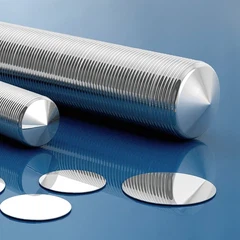



Silicon wafers are a type of semiconductor material, widely used in electronics, computers, communications, automobiles, aerospace and other fields. Silicon wafers are classified into semiconductor silicon wafers and photovoltaic silicon wafers according to the purity of silicon wafers; they are classified into polished wafers, annealed wafers, epitaxial wafers, and SOI wafers according to the process; they are classified into 12 inches\300mm, 8 inches\200mm, and 6 inches\150mm according to the size, among which 200mm and 300mm silicon wafers have a wider range of applications.
Silicon wafer classification |
||
| Classification criteria | Product Categories | introduce |
| Classification by silicon wafer purity | Semiconductor silicon wafers Photovoltaic silicon wafers |
1. Semiconductor silicon wafers are important materials for making integrated circuits. Through photolithography, ion implantation and other methods, integrated circuits and various semiconductor devices can be made. 2. Photovoltaic silicon wafers are silicon wafers used in the photovoltaic field. In the photovoltaic field, silicon wafers are mostly used to complete the conversion of solar energy into electrical energy. |
| Classification by process | "Polished wafer Annealed wafer Epitaxial wafer S O I wafer" |
1. Polishing wafers are the most widely used, most used and most basic products. Other silicon wafer products are produced through secondary processing based on polishing wafers. 2. Annealing wafers are obtained by annealing the polishing wafers in a high-temperature environment filled with argon or oxygen. This can greatly reduce the oxygen content on the surface of the polishing wafer, thereby having better crystal integrity and meeting higher semiconductor etching requirements. 3. Epitaxial wafers use vapor phase growth technology on the surface of the polishing wafer to epitaxially grow a single product structure layer on the surface of the polishing wafer, so that its surface will be smoother than the polishing wafer cut from cutting, thereby reducing surface defects. 4. SOI wafers are sandwich structures, that is, the bottom layer is the polishing wafer, the middle is the buried oxide layer, and the top layer is the active layer polishing wafer, which can achieve high electrical insulation, thereby reducing parasitic capacitance and leakage. |
| Classification by size | 1 2 inches \ 3 0 0 mm 8 inches \ 2 0 0 mm 6 inches \ 1 5 0 mm |
1. Mainly used in high-end products, such as CPU, GPU and other logic chips and memory chips, which is the mainstream size in the current market, with a market share of about 65~70%. 2. Mainly used in low-end and mid-end products, such as power management chips, MCU, power semiconductors, etc., with a market share of about 25~27%. 3. Mainly used in low-end and mid-end products, such as power semiconductors, with a market share of nearly 6~7% |
Silicon wafers are classified into semiconductor silicon wafers and photovoltaic silicon wafers according to their purity. In the photovoltaic field, both monocrystalline silicon and polycrystalline silicon are used, with a purity requirement of about 99.9999% (4-6N). They are mainly used to make solar cells and are widely used in photovoltaic power stations, rooftop distributed photovoltaic power generation and other fields. In the semiconductor field, only monocrystalline silicon is used. As its process continues to shrink, its purity is required to reach 99.999999999% (11N) or above. It is mainly used to make chips and is widely used in communications, consumer electronics, automobiles, industry and other fields. In the silicon wafer purity classification index, it is classified according to different purity levels, and ppm (i.e. parts per million) is usually used to measure its purity. Silicon wafers are used for crystalline silicon, semiconductor silicon, electronic silicon, industrial-grade silicon, production-grade silicon, general silicon, etc. according to different purities.
Comparison between semiconductor silicon wafers and photovoltaic silicon wafers |
|||||
| Applications | Purity standards | Silicon raw material types | Surface standards | Shapes and sizes | Applications |
| Semiconductors | 99.999999999%(11N) | Monocrystalline silicon | Flatness and smoothness are controlled within 1nm | Round, diameter 150, 200, 300 mm | Mainly used to make chips, it is widely used in communications, consumer electronics, automobiles, industry, etc. |
| Photovoltaics | 99.9999%左右(4-6N) | There are both monocrystalline silicon and polycrystalline silicon, of which polycrystalline silicon accounts for about 60%. | Standards are lower than those in the semiconductor field | Square, side lengths can be 125mm, 150mm, and 156mm | Mainly used to make solar cells, widely used in photovoltaic power stations, rooftop distributed photovoltaic power generation and other fields |
Silicon wafer purity classification index |
||
| Silicon wafer purity level | Silicon wafer purity | Silicon wafer impurities |
| 6N level | Purity is 99.9999% | That is, the impurities do not exceed 10ppm |
| 7N level | Purity is 99.99999% | That is, the impurities do not exceed 1ppm |
| 8N level | Purity is 99.999999% | That is, the impurities do not exceed 0.1ppm |
| 9N level | Purity is 99.9999999% or more | That is, the impurities do not exceed 0.01ppm |
Silicon wafer purity index by application |
|
| Classification by application purity | Specific indicators |
| Crystalline silicon | Crystalline silicon is synthesized from diamond and silica sand, and the product purity reaches 99.999%. |
| Semiconductor silicon | Semiconductor silicon is obtained by further processing crystalline silicon. The purity of semiconductor silicon is as high as 99.9999%, which is an upgraded version of crystalline silicon. |
| Electronic silicon | Electronic silicon is used to manufacture electronic devices. Its purity reaches 99.999999%. Electronic silicon has 6 more 9s than crystalline silicon, also known as six-nine grade silicon. |
| Industrial grade silicon | Industrial-grade silicon is used to manufacture industrial parts. Its purity generally reaches 99.99%-99.999%, which is slightly worse than crystalline silicon. |
| Production grade silicon | Production-grade silicon is used to manufacture production parts. Its purity is generally between 99.95%-99.99%, which is slightly worse than crystalline silicon. |
| General silicon | General silicon is a more common silicon. Its purity is generally between 99%-99.8%, which is the most common silicon substance. |


