


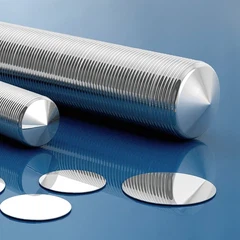




1. What is Natural Oxide Layer on Silicon Wafer
Natural oxide film (also known as natural oxide layer) on silicon wafer refers to an extremely thin layer of silicon dioxide (SiO₂) formed by the spontaneous reaction between silicon wafer and oxygen in air at room temperature. This oxide film grows automatically after the silicon wafer is exposed to air, without manual heating or special oxidation processes.

2. Typical Thickness of Natural Oxide Layer
According to public data:
Exposed to air at room temperature: The final thickness of natural oxide layer is usually stable between 1~2 nm (nanometers).
Freshly cleaved silicon surface (just exposed): grows to about 0.6~1 nm within a few hours.
Long-term exposure (months to years): the final thickness generally does not exceed 2~3 nm.
*Industry consensus: Under normal temperature and pressure atmospheric environment, the thickness of natural oxide layer on silicon wafer is usually in the range of 1~2 nm.**
3. Growth Law of Natural Oxide Layer
The growth of natural oxide layer follows logarithmic law rather than linear growth:
- Rapid growth in initial stage: When silicon wafer is just exposed to air, the oxide layer grows relatively fast, and can reach ~1 nm within a few hours.
- Gradually slowing down: As the thickness of the oxide layer increases, oxygen needs to diffuse through the already formed oxide layer to reach the silicon surface for reaction, so the growth rate gradually decreases.
- Final saturation: Thickness growth gradually stops, stabilizes at 1~2 nm, and will not thicken infinitely.
- Approximation of growth kinetic formula: x ∝ ln(t + 1), where x is the oxide layer thickness, t is the exposure time.
4. Key Factors Affecting the Thickness of Natural Oxide Layer
|
Factor |
Effect on Thickness |
|
Temperature |
The higher the temperature, the faster the oxidation reaction rate, and the larger the final saturation thickness achieved. It is about 1~2 nm at room temperature, and heating will significantly accelerate the growth and increase the thickness. |
|
Oxygen Concentration |
The higher the oxygen concentration in the environment, the larger the thickness of the natural oxide layer. It grows faster and ends up thicker in a pure oxygen environment than in air. |
|
Humidity/Moisture |
Moisture accelerates oxidation, and the natural oxide layer in a high-humidity environment is slightly thicker than in a dry environment. |
|
Contact with Liquid |
When silicon wafer is soaked in some liquids (especially pure water), the growth of natural oxide layer will be inhibited, and the thickness will actually be thinner than in air. |
|
Surface Treatment |
After the silicon wafer surface is roughened, the specific surface area increases, and a thicker natural oxide layer will be formed. |
|
Storage Time |
As the storage time increases, the thickness gradually increases and eventually tends to be saturated. |
5. Role of Natural Oxide Layer in Semiconductor Processing
Beneficial roles:
- Passivate silicon surface: Repair dangling bonds on silicon surface, reduce surface state density, and improve the electrical performance of devices.
- Protective effect: Prevent silicon surface from being contaminated, and play a temporary protective role between wet processes.
- Auxiliary process: Act as a buffer layer in some cleaning and photolithography processes.
Issues to note:
- Impact on ultra-shallow junction process: In advanced manufacturing processes, the presence of natural oxide layer will change the actual junction depth, which requires precise control.
- Contact resistance effect: Before metal-silicon contact, the natural oxide layer must be removed, otherwise the contact resistance will increase.
- Thickness uniformity: Different storage times and different environments will lead to uneven thickness of the natural oxide layer, affecting process consistency.
6. Key Points in Industrial Practice
- Just polished silicon wafer: After polishing, it is immediately exposed to air, and the natural oxide layer grows to ~1 nm within a few hours.
- Long-term storage: Sealed nitrogen environment storage can inhibit the growth of natural oxide layer and keep the thickness at a lower level.
- Pre-process treatment: Before key processes (such as epitaxy, metallization), it is usually necessary to remove the natural oxide layer with diluted HF.
- Thickness measurement: The thickness of natural oxide layer is usually measured by Ellipsometer or X-ray reflection (XRR).
Summary
|
Item |
Data/Conclusion |
|
Typical thickness in room temperature air |
1~2 nm |
|
Growth law |
Fast first, then slow, finally saturated |
|
Most influential factor |
Temperature > Oxygen concentration > Storage time |
|
Industrial significance |
It has protective passivation effect, but also needs to be removed in key processes |
Natural oxide layer is an unavoidable phenomenon on silicon wafer surface. Although its thickness is only a few nanometers, it still needs to be strictly controlled and managed in precision semiconductor manufacturing.
7. Natural Oxidation in Original Factory Sealed Packaging
Oxidation characteristics in sealed packaging
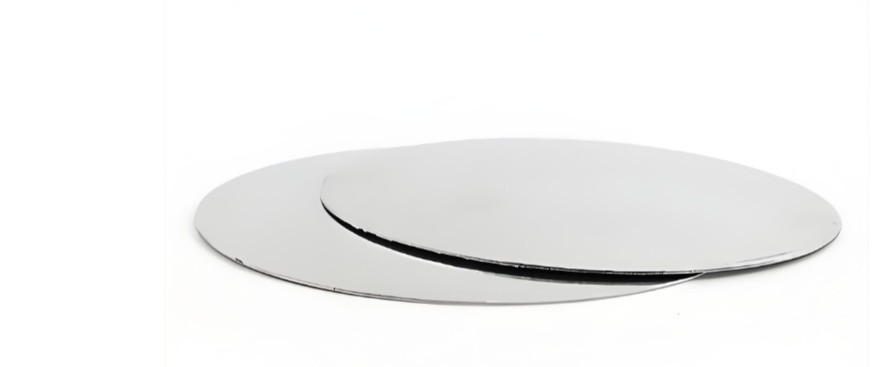
When silicon wafers leave the factory, they usually use nitrogen sealed packaging (some manufacturers use vacuum packaging or dry air packaging). When unopened:
- Extremely low oxygen concentration: High-purity nitrogen is filled in the packaging, and the oxygen content is usually lower than 10 ppm (0.001%), which is far lower than 21% in the atmosphere.
- Extremely slow oxidation rate: Due to insufficient oxygen, the natural oxidation reaction is severely inhibited, and the growth of oxide layer thickness is very slow.
- Extremely low humidity: The original factory packaging usually places a desiccant to control the dew point in the packaging below -40℃, and the moisture content is extremely low, which further slows down the oxidation.
Thickness change in sealed packaging
- When leaving the factory: After the silicon wafer is polished and cleaned, it is usually briefly exposed to air for inspection and packaging. At this time, a natural oxide layer of about 0.5~1 nm has grown.
- Stored for 1 year: In sealed nitrogen packaging, the oxide layer thickness only increases by 0.1~0.3 nm, and the total thickness generally does not exceed 1.5 nm.
- Stored for 2~3 years: The total thickness usually still remains within 2 nm.
- Shelf life: The shelf life of original sealed silicon wafers at room temperature is generally 6~12 months, and some high-end products are marked as 3~6 months. After the shelf life expires, although the natural oxide layer does not increase much, there may be problems such as surface contamination and adsorbed impurities.
Storage Recommendations
|
Storage Condition |
Recommended Maximum Storage Time |
Estimated Oxide Layer Growth |
|
Original sealed nitrogen packaging, normal temperature |
12 months |
< 0.5 nm |
|
Original sealed nitrogen packaging, refrigerated (2~10℃) |
18~24 months |
< 0.8 nm |
|
Unused after unpacking, re-sealed with nitrogen |
3~6 months |
0.3~0.5 nm |
|
Exposed to atmospheric environment |
< 1 month |
Gradually increase to 1~2 nm |
Key conclusion
In the unopened sealed nitrogen packaging from the original factory, natural oxidation is effectively inhibited, and the thickness growth is very slow. Usually, the total thickness of the oxide layer still remains within 2 nm within the shelf life, and will not have a significant impact on use.


