


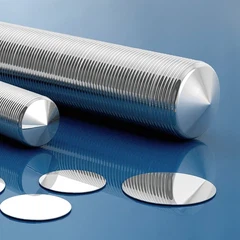




For engineers and procurement specialists at device manufacturers, selecting the optimal wafer substrate is a foundational decision with far-reaching implications for performance, cost, and market success. While silicon remains the undisputed workhorse of the industry, the rise of compound semiconductors like Silicon Carbide (SiC) and Gallium Arsenide (GaAs), alongside specialty materials like sapphire, has expanded the designer's toolkit. This article provides a detailed comparison of these key materials, analyzing their properties, ideal applications, and cost-benefit trade-offs to guide your selection process.
1. Silicon: The Versatile Backbone
Silicon's dominance stems from its excellent balance of electronic properties, natural abundance, and a mature, cost-effective manufacturing ecosystem. It is the default choice for the vast majority of integrated circuits (ICs), microprocessors, memory chips, and standard photovoltaic cells. Modern silicon wafers offer incredible versatility, available in diameters up to 12 inches, with various crystallographic orientations (e.g., <100>, <111>), doping types (P/N), and resistivity ranges (from low to high). Processes like Float-Zone (FZ) growth yield ultra-high purity wafers for power devices, while advanced offerings like Silicon-on-Insulator (SOI) wafers minimize parasitic capacitance and leakage, enabling high-performance, low-power computing and RF switches.
2. Silicon Carbide (SiC): The Power and Heat Champion
SiC is a wide-bandgap semiconductor that excels in environments where silicon reaches its limits. Its key advantages include a breakdown electric field nearly 10 times higher than silicon's and thermal conductivity about three times greater. This allows SiC-based devices (like MOSFETs and Schottky diodes) to operate at much higher voltages, frequencies, and temperatures with significantly lower switching losses. The primary polytypes are 4H-SiC and 6H-SiC, with 4H-N (Nitrogen-doped) being the standard for most power electronics. While SiC wafer costs are higher and diameters (currently mainstream at 4" and 6") are smaller than silicon's, the total system cost savings in applications like electric vehicle inverters, industrial motor drives, and renewable energy conversion are compelling.
3. Gallium Arsenide (GaAs): The RF and Opto-Electronics Specialist
GaAs possesses high electron mobility and a direct bandgap, making it uniquely suited for high-frequency and photonic applications. It is the material of choice for radio frequency (RF) components in smartphones, satellite communications, and radar systems, where its low noise figure and efficiency at microwave frequencies are critical. Its direct bandgap also makes it ideal for optoelectronic devices like lasers, high-brightness LEDs, and solar cells for space applications. GaAs wafers come in semi-insulating (SI) types for RF isolation and semiconducting types for active device layers. However, its brittleness, higher cost, and toxicity in processing require specialized handling.
4. Sapphire (Al₂O₃): The Robust Insulating Platform
Sapphire is not a semiconductor but an excellent electrical insulator with outstanding mechanical strength, chemical inertness, and optical transparency. Its primary use is as a heteroepitaxial substrate. The most common orientation is C-plane sapphire, widely used for growing Gallium Nitride (GaN) layers for blue/white LEDs and laser diodes. It also serves as a substrate for Micro-Electro-Mechanical Systems (MEMS), RF filters, and robust optical windows. While lattice mismatch with semiconductors like GaN can introduce defects, advanced buffer layer techniques have made sapphire a cost-effective and reliable platform for mass-producing optoelectronic devices.
Making the Strategic Choice
The selection matrix below summarizes the decision-making process:
|
Material |
Key Property |
Primary Applications |
Cost & Maturity Consideration |
|
Silicon (Si) |
Balanced properties, mature processing |
ICs, CPUs, memory, general solar cells |
Lowest cost, most mature technology |
|
Silicon Carbide (SiC) |
Wide bandgap, high thermal conductivity |
EV power trains, industrial motors, fast chargers |
Higher cost, rapidly scaling production |
|
Gallium Arsenide (GaAs) |
High electron mobility, direct bandgap |
RF front-ends, satellite comms, lasers, space solar |
High cost, specialized fabrication |
|
Sapphire |
Electrically insulating, very hard |
GaN LED substrates, MEMS, protective optics |
Moderate cost, niche but established |
Partnering for Material Success
Navigating this complex material landscape requires more than just a catalog. It demands a partner with deep technical expertise across the entire spectrum of substrates. From providing standard and high-resistivity silicon wafers to supplying precisely specified SiC (4H-N, 6H-SI), GaAs (semi-insulating), and sapphire (C-plane, epi-ready) wafers, a full-portfolio supplier like Sibranch Microelectronics acts as a single point of contact. With extensive inventory ensuring 24-hour delivery for many standard items and the ability to support custom orientations and specifications, such a partner empowers your engineering team to innovate freely while simplifying your procurement and supply chain logistics.


