


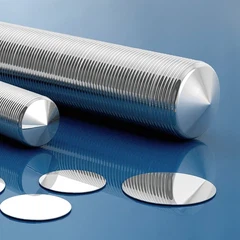




Choosing the right silicon wafer material is a problem that photovoltaic cell manufacturers attach great importance to.
The silicon wafer is the "body" of the photovoltaic cell. Whether the silicon wafer is good or bad will directly affect the performance and data of the battery.
How to choose silicon wafer? Grasp the two major directions.
1. Size
Silicon wafers have industry standard sizes. When selecting, manufacturers need to choose according to the standard size.
The standard size of monocrystalline silicon wafers and polycrystalline silicon wafers is 156mmX156mm, the error is usually within 5mm, and there are chamfers on the edges of silicon wafers.
There are two possibilities for the formation of the chamfer.
One kind of scientific name is "edge chamfering", which is produced by artificial production. On the one hand, "edge chamfering" can make the silicon wafer look more beautiful; on the other hand, it can effectively reduce the cracking at the edge of the silicon wafer. When monocrystalline silicon is changed from a round wafer to a square wafer, such chamfers may also be left, which need to be distinguished when selecting.
The chamfer is usually a 45° right triangle.
2. Appearance
Wafer appearance inspection is an extremely important test link. Through the appearance of silicon wafers, manufacturers can intuitively understand some of its properties. Silicon wafers with serious appearance defects are not suitable for the production of photovoltaic cells.
The use of silicon wafers with unqualified appearance to produce solar cells will reduce the conversion efficiency of the cells in the slightest and cause the cells to be unusable in severe cases.
Silicon itself is a fragile material.
It is very easy to break due to transportation, labor, etc.
Sometimes the silicon wafer is not broken, but there is a fracture mark, which can evolve into a fracture and pose a potential threat.
In addition, the line marks caused by scratches and the concave and convex marks caused by the manufacturing process will reduce the conductivity of the silicon wafer.
Silicon wafers with cracks, broken marks, line marks, and concave and convex marks cannot be used.
In addition, in the process of selecting silicon wafers, whether there is dirt, the thickness, and the lifetime of minority carriers are also important reference standards.
How to choose the right silicon wafer?
Jul 04, 2023
Leave a message
You Might Also Like


