





Overview of China's silicon wafer industry market
Basic concepts and classifications
Definition of silicon wafers
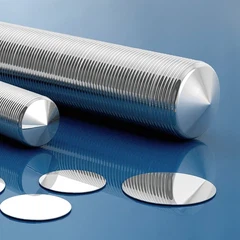
Silicon wafers refer to a thin, flat, round silicon matrix material, which is an important material for making integrated circuits. Photolithography, ion implantation, and other methods can make integrated circuits and various semiconductor devices. Silicon accounts for about 27% of the earth's crust. It is abundant in reserves and cheap, so it has become the world's most widely used and largest-volume semiconductor basic material. Currently, more than 90% of semiconductor products are made of silicon-based materials. Silicon wafers are sheet-like objects made of silicon, with diameters of 6 inches, 8 inches, 12 inches, etc.

Classification of silicon wafers
Silicon wafers are a type of semiconductor material, widely used in electronics, computers, communications, automobiles, aerospace and other fields. Silicon wafers are classified into semiconductor silicon wafers and photovoltaic silicon wafers according to the purity of silicon wafers; they are classified into polished wafers, annealed wafers, epitaxial wafers, and SOI wafers according to the process; they are classified into 12 inches\300mm, 8 inches\200mm, and 6 inches\150mm according to the size. Among them, 200mm and 300mm silicon wafers have a wider range of applications.
Classification of silicon wafers
| Classification Standard | Product Category | Introduction |
| Classification by silicon wafer purity | Semiconductor silicon wafers Photovoltaic silicon wafers |
1. Semiconductor silicon wafers are important materials for making integrated circuits. Through photolithography, ion implantation and other methods, integrated circuits and various semiconductor devices can be made. 2. Photovoltaic silicon wafers are silicon wafers used in the photovoltaic field. In the photovoltaic field, silicon wafers are mostly used to complete the conversion of solar energy into electrical energy. |
| Classification by process | Polished wafer Annealed wafer Epitaxial wafer SOI wafer |
1. Polishing wafers are the most widely used, most used and most basic products. Other silicon wafer products are produced through secondary processing based on polishing wafers. 2. Annealing wafers are obtained by annealing the polishing wafers in a high-temperature environment filled with argon or oxygen. 3. Epitaxial wafers use vapor phase growth technology on the surface of the polishing wafer to epitaxially grow a single product structure layer on the surface of the polishing wafer, so that its surface will be smoother than the polishing wafer cut from cutting, thereby reducing surface defects. 4. S0I wafers are sandwich structures, that is, the bottom layer is the polishing wafer, the middle is the buried oxide layer, and the top layer is the active layer polishing wafer, which can achieve high electrical insulation, thereby reducing parasitic capacitance and leakage. |
| Classification by size | 12 inches\300mm 8 inches\200mm 6 inches\150mm |
1. Mainly used in high-end products, such as CPU, GPU and other logic chips and memory chips, which is the mainstream size in the current market, with a market share of about 65~70%. 2. Mainly used in low-end and mid-end products, such as power management chips, MCU, power semiconductors, etc., with a market share of about 25~27%. 3. Mainly used in low-end and mid-end products, such as power semiconductors, with a market share of nearly 6~7%. |
Comparison of silicon wafers with different purity indicators
The main application areas of silicon wafers are classified into semiconductor silicon wafers and photovoltaic silicon wafers according to purity classification. In the photovoltaic field, both monocrystalline silicon and polycrystalline silicon are used, and the purity requirement is about 99.9999% (4-6N). They are mainly used to make solar cells and are widely used in photovoltaic power stations, rooftop distributed photovoltaic power generation and other fields. In the semiconductor field, only monocrystalline silicon is used. As its process continues to shrink, its purity is required to reach 99.999999999% (11N) or above. It is mainly used to make chips and is widely used in communications, consumer electronics, automobiles, industry and other fields.
In the silicon wafer purity classification index, it is classified according to different purity levels, and ppm (i.e. parts per million) is usually used to measure its purity. Silicon wafers are used for crystalline silicon, semiconductor silicon, electronic silicon, industrial-grade silicon, production-grade silicon, general silicon, etc. according to different purities.


Development History of Global Silicon Wafer Industry
Silicon wafers are developing towards larger sizes as a whole
The development of global silicon wafers can be traced back to the 1960s. With the continuous advancement of technology, the application scope of silicon wafers has been continuously expanded. Photovoltaic silicon wafers and semiconductor silicon wafers are both thin slices cut from silicon single crystal ingots, but their application fields are different. Photovoltaic silicon wafers are mainly used in the manufacture of solar panels, while semiconductor silicon wafers are used to manufacture integrated circuits, transistors and other electronic components. In the semiconductor field, silicon wafers are the key basic materials for the development of the semiconductor industry. In the development process of silicon wafers, with the continuous improvement of technology level, the larger the size of silicon wafers, the higher the production and application efficiency of semiconductors. The overall trend of the silicon wafer industry is towards larger sizes, from the initial 1-inch and 2-inch to the current market mainstream 6-inch, 8-inch and 12-inch. In the photovoltaic field, with the promotion of clean energy, the photovoltaic power generation industry has shown a strong development trend. Many photovoltaic manufacturers have expanded their production capacity. The global photovoltaic power generation installed capacity has shown a rapid growth trend, which has also driven the development of global photovoltaic silicon wafers. The size of silicon wafers has increased with application.


Development History of China's Silicon Wafer Industry
Strengthen independent research and development, innovate local silicon wafer growth
The development of Chinese silicon wafers initially relied on imports, and the domestic silicon wafer industry developed slowly. With the purchase of foreign silicon wafer production equipment and the strengthening of silicon wafer research and development, a number of silicon wafer production companies have emerged in China, and the speed of localization has accelerated. When my country's silicon wafer industry entered a period of rapid development, the Chinese government introduced corresponding policies to support the development of the silicon wafer industry. The development of photovoltaic silicon wafers in my country began in 2012. 100-156mm was popular in the industry, and the standards were different; in 2013, the unified silicon wafer size standard of five domestic manufacturers was 156.75mm; from 2019 to the present, domestic leading companies have launched photovoltaic silicon wafers of different sizes to adapt to the development of downstream industries. The development of China's semiconductor silicon wafers keeps pace with the international pace. The production specifications of semiconductor silicon wafers of domestic enterprises have developed from 50mm to 300mm, and the quality and competitiveness of silicon wafer products have been continuously improved.


Introduction to China's silicon wafer industry classification
(一) Semiconductor silicon wafers: parameters and application scenarios
Semiconductor silicon wafers refer to thin slices cut from silicon single crystal ingots, which are widely used substrate materials in the semiconductor industry. Currently, more than 90% of integrated circuit chips use silicon as the substrate material. According to the classification of silicon wafer size, the specifications are generally distinguished by diameter, usually 6 inches, 8 inches, 12 inches, etc. From the first mass production of 2-inch silicon wafers in 1965 to the mass production of 12-inch silicon wafers in 2000, semiconductor silicon wafers have continued to develop in the direction of large sizes, and large-size silicon wafers have become the mainstream of the industry.
According to the classification of silicon wafer application scenarios, silicon wafers can be mainly divided into positive wafers and test wafers. Positive wafers are used directly in wafer manufacturing; test wafers are used for experiments and checking the status of manufacturing equipment in the early stage of operation to improve its stability.


(一) Semiconductor silicon wafer: silicon wafer size
Specifications and applications of silicon wafers
Silicon wafers are one of the most important raw materials in the electronics industry, and are mainly used to manufacture integrated circuits, capacitors, diodes and other components. Integrated circuits are tiny circuits composed of a large number of basic components such as transistors, capacitors, resistors, etc., which can be used in various electronic devices such as computers, communication equipment, and entertainment equipment. Semiconductor silicon wafers are one of the core materials for manufacturing integrated circuits.
Semiconductor silicon wafer sizes are divided into specifications based on diameter, and are divided into 2 inches (50.8mm), 4 inches (100mm), 6 inches (150mm), 8 inches (200mm), and 12 inches (300mm). Different silicon wafer sizes and processes are used for different semiconductor products.

Advantages of large-size silicon wafers
The number of chips manufactured on a single silicon wafer increases: the larger the wafer, the less waste there is at the edges, which improves the utilization rate of the silicon wafer and reduces costs. Taking 300mm silicon wafers as an example, its available area is twice that of 200mm silicon wafers under the same process, which can provide a productivity advantage of up to 2.5 times the number of chips.
The overall utilization rate of silicon wafers is improved: the manufacture of rectangular silicon wafers on round silicon wafers will make some areas at the edge of the silicon wafer unusable, and the increase in the size of the silicon wafer reduces the loss ratio of unused edges.
Equipment capacity improvement: Under the condition that the basic process flow: thin film deposition → photolithography → etching → cleaning and other basic development conditions remain unchanged, the average production time of a chip is shortened, the equipment utilization rate is improved, and the company's capacity is expanded.

(I) Semiconductor silicon wafer: SOI silicon wafer
(II) Photovoltaic silicon wafer: Structure and parameters
(II) Photovoltaic silicon wafer: Indicators and preparation process
(II) Photovoltaic silicon wafer: Path to reducing silicon wafer technology costs
Core technologies of China's silicon wafer industry
Single crystal growth technology
Single crystal silicon growth technology: is a crystal growth method used to obtain semiconductor materials. Among them, single crystal silicon belongs to the cubic crystal system and diamond structure, and is a semiconductor material with excellent performance. Single crystal silicon growth technologies include: Czochralski single crystal method, magnetic field Czochralski method, and continuous crystal pulling method.

• Principle of Czochralski method:The process is to put polysilicon into a quartz crucible, heat it and slowly melt it, and cool it into a single crystal through the seed crystal axis during the heating process to make single crystal silicon. The specific steps include: loading, vacuuming, filling with protective gas, heating, melting, seeding, etc.

•Magnetic field Czochralski method: Based on the Czochralski growth process, a strong magnetic field is applied to the melt in the crucible to suppress the thermal convection of the melt. This method is used to grow Czochralski silicon single crystals with low oxygen concentration.

•Continuous crystal pulling method: Using a special vertical single crystal furnace, the crystal rod is pulled without adding materials and melted at the same time. The polysilicon liquid level in the crucible remains stable, which can provide a more stable thermal field environment. Raw materials are continuously added during the crystal growth process to make the crystal growth process more uniform and stable.

Silicon wafer cutting technology
Principle of silicon wafer cutting: The upper surface of the silicon rod is fixed in the cutting equipment, and the silicon rod moves slowly downward and is ground by the high-speed diamond wire to achieve the cutting effect. The function of silicon wafer cutting is to cut the silicon block into silicon wafers through the moving cutting wire cutting net. At present, silicon wafer cutting technology has the advantages of high cutting efficiency, low cost and low material loss. Silicon wafer cutting technology is of great significance in many fields, and cutting technology has long been a hot topic in the research of the silicon wafer industry.
The inner circle of the silicon wafer refers to the circular area on the surface of the silicon wafer, which is the edge of the silicon wafer. The function of the inner circle of the silicon wafer is to prevent the edge of the wafer from breaking, prevent the concentration of thermal stress, and reduce the cracks on the edge of the silicon wafer, so that the silicon wafer or battery cell breaks under the action of external stress. Silicon wafer chamfering is to grind off the broken edges, corners and cracks on the edge of the silicon wafer to obtain a smooth radius circumference on the edge of the silicon wafer. This step is generally performed before or after grinding. There are three main functions of chamfering: preventing wafer edge breakage, preventing thermal stress concentration, and reducing the risk of silicon wafer or battery cell breakage due to cracks on the edge of the silicon wafer under the action of external stress.


Production process of China's silicon wafer industry
Production process of silicon wafer
The production process of silicon wafer is complex and involves many processes. The main production links include single crystal growth, slicing, polishing, epitaxial growth and other processes. Single crystal growth is to obtain semiconductor materials that meet the requirements of device manufacturing, and the purified polycrystalline material must be grown into a single crystal. Polishing is to remove micron-level and nano-level materials on the surface of the silicon wafer through the corrosion of chemical solutions in the polishing liquid and the removal of mechanical grinding in the polishing liquid. Epitaxial growth is to grow a single crystal layer with the same crystal orientation as the substrate on a single crystal substrate, extending a section outward from the original crystal. The new single crystal layer grown epitaxially can be different from the substrate in terms of conductivity type, resistivity, etc., and multi-layer single crystals of different thicknesses and requirements can also be grown to improve the flexibility of device design and the performance of the device.

Silicon wafer manufacturing supporting process equipment
The silicon wafer manufacturing process includes single crystal growth, rounding and cutting, slicing, chamfering and grinding, polishing, cleaning and testing, which correspond to the single crystal silicon growth furnace, rolling and cutting machine, slicer, chamfering machine, CMP polisher, cleaning and testing equipment. The most important of these are cutting and polishing. Cutting is to cut the silicon wafer from the silicon ingot, while polishing is to process the surface of the silicon wafer for the subsequent manufacturing process.

Silicon wafer single crystal growth: Czochralski method and zone melting method
The main processes for silicon wafer single crystal growth are Czochralski method and zone melting method. Czochralski method Place the purified raw materials in a crucible, and the crucible is placed in an appropriate heat field. During the heating process, the raw materials gradually melt in the crucible. Thereafter, the pre-placed seed crystal is pulled and rotated at a certain speed to grow a single crystal that meets the conditions. Zone melting method refers to a method that uses the melting-solidification process to remove impurities based on the principle of liquid-solid equilibrium. Zone melting can remove impurities from an element or compound to achieve the purpose of purification. The single crystal silicon produced by the Czochralski method has a high oxygen content, high mechanical strength, and large size, and is mostly used to produce low-power integrated circuits, while the single crystal silicon produced by the zone melting method has high purity and uniform electrical properties, and is mainly used to produce high-power devices.


China's silicon wafer industry chain
Upstream and downstream develop in coordination, and market demand continues to grow
Semiconductor devices are one of the main application areas of silicon wafers, including integrated circuits, optoelectronic devices, sensors and other fields. The important role of silicon wafers in semiconductor devices is particularly important, so the quality and performance requirements of silicon wafers are very high. The upstream of the silicon wafer industry chain mainly includes silicon wafer raw materials and silicon wafer equipment. The midstream of silicon wafers mainly includes silicon wafer process flow and classification of silicon wafers. Silicon wafer manufacturing requires the use of high-precision equipment and technology, including single crystal growth, rounding and truncation, slicing, polishing and other links. The downstream of silicon wafers mainly includes application industries, including communication technology, consumer electronics automobiles, cloud computing, etc. The upstream and downstream of silicon wafers develop in coordination to jointly meet the needs of downstream customers. In addition, silicon wafers are also widely used in solar panels, LED lighting and other fields, and the market demand in these fields is also growing. In order to meet market demand, silicon wafer companies need to continuously improve the quality and performance of silicon wafers, while strengthening technology research and development and innovation to promote the development of the silicon wafer industry.

China's silicon wafer industry business model
Silicon material cleaning and cutting fluid recycling model
Silicon material cleaning fluid is a liquid used to clean the surface of silicon wafers, which can remove impurities and oxides on the surface for subsequent processing. Silicon material cutting fluid is a liquid used to cut silicon wafers, which can make silicon wafers easier to cut. Silicon material cleaning services include self-cleaning mode, third-party cleaning mode (cleaning outside the factory), and third-party cleaning mode (cleaning within the factory). As the scale of the silicon material industry chain continues to expand, the existing cleaning mode can no longer meet the customer's cleanliness requirements. Therefore, the factory provides corresponding services to ensure service quality and deepen professional division of labor. Cutting fluid treatment modes include direct discharge, self-treatment, and service provision within the factory. The cutting fluid treatment mode is conducive to reducing the discharge of waste liquid and the use of chemicals, saving the purchase cost of cutting fluid and cleaning agent, and sewage discharge costs, reducing customer production costs, and improving market competitiveness.
Comparison of Silicon Material Cleaning Service Operation Models
| Silicon material cleaning mode | Model Introduction | Customers | Advantages | Disadvantages |
| Self-cleaning mode | The production department of the silicon material enterprise is responsible for the silicon material cleaning service by itself, and completes the silicon material cleaning operation by building its own silicon material cleaning workshop | Suitable for downstream enterprises with integrated development strategies | The production process and silicon material cleaning process are all under the management of the same company, which facilitates the unified coordination and scheduling of silicon material production and cleaning | The management span has been increased, and the lack of experience in the field of silicon material cleaning has led to a decline in management efficiency |
| Cleaning by third party (cleaning outside the factory) |
Adopt service outsourcing to cooperate with external silicon material cleaning service companies, and the cleaning outsourcing company regularly transports silicon materials to its workshop outside the factory for cleaning | Suitable for downstream enterprises of average size | Most of the companies engaged in this type of business are small and medium-sized enterprises, and downstream companies have more say | The cleaning equipment and workshop cleanliness cannot meet the requirements, and the cleaning quality of silicon materials cannot be guaranteed; the daily turnover and transportation cost of silicon materials is high |
| Cleaning by third party (cleaning inside the factory) |
The difference is that the monocrystalline silicon material industry will choose to cooperate with silicon material cleaning companies that have business cooperation and industry experience, and allow them to build workshops nearby in the factory area to clean silicon materials | Suitable for large-scale enterprises with specialized development strategies | It not only solves the problem of reduced management efficiency caused by cross-border business of self-operated enterprises, but also solves the problem that the cleaning quality and safety of the second model cannot be guaranteed | It is necessary to establish a deep cooperative relationship with service providers |
Cutting fluid treatment mode
| Cutting fluid treatment mode | Model introduction | Customers | Advantages | Disadvantages |
| Direct discharge | The production department of silicon material enterprises collects waste cutting fluids and discharges them after centralized treatment | Suitable for small-scale enterprises or large-scale enterprises with large investments in environmental protection equipment | Omitting a link in the production of monocrystalline silicon wafers, improving management efficiency | Requires large investment in environmental protection equipment; has a certain impact on the unit cost of monocrystalline silicon wafers |
| Self-treatment | Complete the recycling and treatment of cutting fluids by building a recycling and treatment workshop | Suitable for downstream enterprises with integrated development strategies | The production link and the cutting fluid treatment link are all under the management of the same company, which is convenient for unified planning and scheduling | Increases the management span, coupled with the lack of experience in the field of cutting fluid treatment, which leads to a decrease in management efficiency |
| Service within the factory | Cooperate with enterprises with rich industry experience, allow them to build workshops within the factory area and connect them with the production line to carry out real-time recycling and treatment of silicon wafer cutting fluids | Suitable for large-scale enterprises with specialized development strategies | Solving the problem of reduced management efficiency caused by the company's self-operated cross-border business, saving costs for downstream customers | Needs to establish a deep cooperative relationship with service providers |
Changes in silicon wafer prices affect production costs
Since silicon wafers are widely used in fields such as electronic equipment manufacturing and the solar industry, the ups and downs of the economic cycle will have an impact on prices, and fluctuations in silicon material prices will directly affect the production costs of silicon wafers. According to PVInfoLink data, in the global silicon wafer price trend, the price of monocrystalline silicon wafers 210mm, monocrystalline silicon wafers 182mm, and monocrystalline silicon wafers 166mm are affected by market demand and fluctuate within a certain range. Starting in June 2021, silicon wafer prices entered an upward channel and reached a high point in August 2022, with a strong growth rate. With the continuous advancement of technology, the production process of silicon wafers has become more efficient and costs have continued to decrease. In addition, since the second half of 2022, the cyclical impact caused by the mismatch between supply and demand in the global semiconductor industry has caused global silicon wafer prices to fluctuate and decline in the past year.


Global silicon wafer industry market size
Silicon wafer shipments remain stable, market size grows rapidly
Silicon-based semiconductor materials are currently the semiconductor materials with the largest output and the widest application. The application field of semiconductors continues to expand with the advancement of science and technology. Emerging fields such as the Internet of Things, artificial intelligence, and cloud computing are booming, bringing new growth opportunities to the semiconductor silicon wafer industry. Since 2018, global semiconductor silicon wafer shipments have shown an upward trend amid fluctuations. According to SEMI data, semiconductor shipments will enter a new growth cycle starting in 2021. Benefiting from emerging application fields and the popularity of 12-inch silicon wafers, global silicon wafer shipments are expected to exceed 15 billion square inches in the future. According to SEMI data, the global semiconductor silicon wafer market size basically remained at US$11 billion from 2018 to 2020. Starting in 2021, with the diversified development of terminal equipment, the industry has also entered a period of rapid growth. It is expected that by the end of 2023, the global semiconductor silicon wafer market size is expected to exceed US$14 billion.


China's silicon wafer industry market size
Silicon wafer production continues to grow, and the downstream market is vast
Since 2018, my country's silicon wafer production has generally shown an annual growth trend. According to CPIA data, my country's silicon wafer production has entered its peak period since 2021, with an accelerated growth rate. With the expansion of leading companies, continuous technological breakthroughs and the growth of downstream demand, silicon wafer production is expected to exceed 400GW in the future. In recent years, my country's silicon wafer industry has developed rapidly, and the growth rate of the domestic market size has exceeded the global average growth rate. According to SEMI data, my country's semiconductor silicon wafer market size has exceeded 10 billion yuan in market size from 2021 to 2022, and the growth rate has continued to accelerate. It is expected to exceed 15 billion yuan in market size in the future, and there is broad room for market growth.


